Friday, August 25, 2006

Commissioning extraordinary Communion ministers

As we move into the fall, you might be considering training and commissioning new Communion ministers (extraordinary ministers of Holy Communion).

Every Communion minister who is not a bishop, priest, or deacon must be commissioned by the Ordinary of the diocese (the Bishop or his delegate) at the request of the pastor. (In cases of emergency, when an extraordinary Communion minister is needed and no commissioned extraordinary Communion ministers are available, a pastor may depute a qualified person to assist at a particular celebration.)

Before your extraordinary Communion ministers begin their service, your pastor would send a letter to Bishop Patrick J. McGrath requesting that certain members of your parish be commissioned as Communion ministers. Here's a sample letter:

Dear Bishop McGrath:

I am requesting that the following persons be commissioned as extraordinary ministers of Holy Communion. They are active parishioners of N. and are fully initiated Catholics in good standing. They have been adequately formed and properly trained to be Communion ministers primarily at Mass.


[list names]


All have participated fully in our parish's preparation process, and they are committed to ongoing formation and instruction for the duration of their ministry. We believe they are ready to exercise this ministry for the good of our parish and the worshiping assembly.

Thank you for your consideration of this request.


Once you receive Bishop McGrath's approval, you can commission them according to the rite found in the Book of Blessings, Chapter 63.

Other liturgical ministers need not be commissioned by the Bishop, but they should also be adequately trained. It may also be good to bless them as they begin (or continue) their ministry. This previous article might help you in crafting a blessing of liturgical ministers.

Tuesday, August 22, 2006

Is there a doctor in the house?

Father José Antonio Rubio, chaplain at San José State University and director of ecumenical and interreligious affairs for the Diocese of San José, successfully defended his dissertation entitled “Bishop Eduardo Sánchez Camacho (1838-1920), A Dissenting Voice in the Mexican Church,” on August 16, 2006, at the Jesuit School of Theology at Berkeley, thereby earning the degree Doctor of Sacred Theology, cum laude. Many supporters from the Newman Center at San José State University, the parish of Sacred Heart of Jesus (where Fr. José has served for many years), and the chancery drove through afternoon traffic and found parking in Berkeley to hear his defense and celebrate with him.

¡Felicidades!

Filipino Debut Blessing

Filipino Debut Blessing
by Fr. Wayne Negrete

© 2006, Wayne Negrete.
Used with permission.


INTRODUCTION

PRESIDER:
In the spirit of Filipino tradition, we gather today to celebrate the debut of N., who now at 18 years of life, enters into adulthood.

N. comes here with her parents, N. and N. With much love and pride, they present her to you, the community, with the hope and confidence that she will share her personal gifts in service of God’s Kingdom,

In a spirit of gratitude, N. comes here with her cotillion court of 9 teenage boys and 9 teenage girls, each representing one year of her life and the graces received during each of those years.

N. also comes here with all of you, family and friends, to give praise to God for all God’s blessings and to ask your prayers and support for God’s continued guidance in her adult life.

And so, let us pray.


PRAYER

PRESIDER:
Lord God, Giver of Life and Constant Companion,
we give you thanks and praise for the life of N.
on this very special day of her debut.

Bestow your heavenly blessings upon N. today
and all the days of her life.

As she enters into the life of the community as an adult woman,
may the Holy Spirit continue to guide her in wisdom,
knowledge, and strength.

Through the intercession of Mary,
may she be counted
among the faithful and valiant women of the community,
sharing her gifts, talents, and time for the sake of others,
especially the poor and marginalized.

May her heart continue to be molded
into the likeness of Jesus’ heart,
that she may serve you with joy and happiness.

Give her good health,
a long life,
close friends,
a discerning heart,
a zeal for life
and lots of love and hope.

We pray this
in the name of the Father, (+)
and of the Son,
and of the Holy Spirit. Amen.

Learn about Asian Catholic music, liturgy, and culture

Two great opportunities to visit Asia...

Experience Viet Nam: Pilgrimage/Study Tour


January 4 – 15, 2007
Land and air from San Francisco: $2,095 (plus taxes)
Tour coordinator: Bro. Rufino Zaragoza, OFM (Oakland, CA)
Contact Rufino at 510/536-1287, ext. 140 E-mail: RufinoZ@yahoo.com
Visit www.VNPilgrimage.com for itinerary and details
(Sponsored by OCP Pilgrimages: http://www.ocp.org/en/events/tours.php)

Download a flyer


Cultural and Pastoral Exposure Program


18 Days
January 17 - February 3, 2007
Departure from Los Angeles
7 days/6 nights PHILIPPINES – 2 days/2 nights Hong Kong –9 days/8 nights VIETNAM


For more information, please contact:
Sr. Theresa Phan, LHC
Office of Asian Pacific Ministry - Diocese of San Bernardino
1201 E. Highland Avenue, San Bernardino, CA 92404
Phone: 909-475-5348 / Fax: 909-475-5364
Email: tphan@sbdiocese.org

Download a flyer

Friday, August 18, 2006

Pope Benedict’s Message to Altar Servers

On August 2, 2006, Pope’s Benedict XVI addressed the delegates of the European Pilgrimage of Altar Servers, boys and girls mostly from Germany. His catechesis for them can apply to all of us who serve weekly and often daily at the Eucharistic table. Read the entire text here.

Here is a brief excerpt:

Dear Altar Servers, you are, in fact, already apostles of Jesus! When you take part in the Liturgy by carrying out your altar service, you offer a witness to all. Your absorption, the devotion that wells up from your heart and is expressed in gestures, in song, in the responses: if you do it correctly and not absent-mindedly, then in a certain way your witness is one that moves people.

The Eucharist is the source and summit of the bond of friendship with Jesus. You are very close to Jesus in the Eucharist, and this is the most important sign of his friendship for each one of us. Do not forget it.

This is why I am asking you not to take this gift for granted so that it does not become a sort of habit, knowing how it works and doing it automatically; rather, discover every day anew that something important happens, that the living God is among us and that you can be close to him and help him so that his mystery is celebrated and reaches people.

If you do not give into habit, if you put your innermost self into carrying out your service, then you will truly be his apostles and bear fruits of goodness and service in every context of your life: in the family, at school, in your free time.

Take to one and all that love which you receive in the Liturgy, especially to places where you realize that they lack love, where they do not receive goodness, where they suffer and are lonely.

World Youth Day, USA – October 29, 2006

In 1985, Pope John Paul II initiated World Youth Day, an annual celebration on Palm Sunday to recognize the youth of the Church. The United States Bishops moved the annual celebration to the 30th Sunday of Ordinary Time which takes place this year on October 29, 2006.


Below are some prayer and liturgy resources from the National Federation for Catholic Youth Ministry to help you incorporate this celebration into your parish and home prayer.


World Youth Day Prayer 2006 – “We Believe”
World Youth Day 2006 – Liturgical Planning Guide

Prayers for Peace

Although there is currently a ceasefire between Hezbollah and Israel, we are still called to pray for peace in this area of the world and for those countries, cities, neighborhoods, and homes where ceasefire seems far off.

Below are some resources for praying for peace that you can download and use in your parishes and homes.


“The Church cannot and must not take upon herself the political battle to bring about the most just society possible. She cannot and must not replace the State. Yet at the same time she cannot and must not remain on the sidelines in the fight for justice. She has to play her part through rational argument and she has to reawaken the spiritual energy without which justice, which always demands sacrifice, cannot prevail and prosper. A just society must be the achievement of politics, not of the Church. Yet the promotion of justice through efforts to bring about openness of mind and will to the demands of the common good is something which concerns the Church deeply.”
-- Pope Benedict XVI, Deus Caritas Est, 28a

Thursday, August 17, 2006

Taking the Initiative In the Liturgy

Initiatives, In Support of Christians in the World
September 2006, #158

Liturgical expert Mark Searle (1941-1992) tried to write a book in his last days. His effort now appears as Called To Participate edited by Anne Koestner and Barbara Searle (Liturgical Press [2006], PO Box 7500, Collegeville, MN 56321; $9.95).

Searle is not entirely pleased with what’s happened since Vatican II. However, he hardly wants a return to the Latin Mass. The problem is that today’s liturgy-even in the most sophisticated parishes-imbibes too much modern individualism. Even though worshippers “sing with one voice” and partake of a common loaf, the liturgy, like religion in general, is an exercise in privatization.

Many weddings, as every priest can attest, exemplify Searle’s distress. The wedding reflects the groom and bride as individuals, but soars past “marriage as an institution and a tradition.”

Searle isn’t faulting priests who accommodate stressed out brides and grooms. He is not criticizing dedicated liturgy coordinators and lay ministers. Nor, unlike the so-called liturgical restorationists, Searle is not at war with modernity.

The missing dimension, says Searle, is a vision of the liturgy as a public activity (the work of the people in the public square) – one that shapes the world. This vision, Searle details, was part of the liturgical movement from the late 1800s until Vatican II (1962-1965). It included people like Fr. Dom Virgil Michel, OSB (1890-1938) and National Center for the Laity founders Msgr. Dan Cantwell (1915-1996) and Ed Marciniak (1917-2004). This era is described briefly in The People’s Work by Rev. Frank Senn (Augsburg Fortress [2006], PO Box 59304, Minneapolis, MN 55459; $35) and extensively in The Unread Vision: the Liturgical Movement in the U.S. by Fr. Keith Pecklers, SJ (Liturgical Press [1998]; $24.95).

Called To Participate is not bullet point liturgical techniques. In fact, says Searle, trying to “generate an awareness of the social dimension of Christianity” by superimposing techniques will likely only yield more individualism. Instead, Searle suggest some alternative ways of thinking about a parish and its liturgy.

Echoing a National Center for the Laity theme, Searle says that most pastors and parish leaders currently regard “people at the core [of the parish] as normative and their mutual involvement [in intra-parish ministry] as a model for everyone else, which is neo-clericalism.” The liturgy and the world might change, he continues, if parish leaders “accepted that it is the people on the fringe who are normative; that is the stranger, not the friend, who is the typical [Christian] companion.”

To overcome “religious individualism,” Searle concludes, we “need forms of worship that actually cultivate…the liturgy of the world.”


National Center for the Laity
P.O. Box 291102
Chicago, IL 60629
www.catholiclabor.org/NCL.htm

Tuesday, August 15, 2006

Quinceañera / Debut Blessing

I was asked to write a blessing for the occasion of a Filipino “debut.” A debut is similar to the Hispanic tradition of Quinceañeras or the European tradition of debutante balls or presentations for young women (and sometimes men) who are now considered adults in society. Below is what I created slightly adapted from the “Prayer of Blessing on the Occasion of A Birthday” from the Catholic Book of Blessings. Feel free to use it in your own parish or home celebrations of coming of age.


God of every age,
you created all the people of the world
and you know each of us by name.
We thank you for N.,
who today blesses you for the life you have given her.
As she commits herself more deeply to this community
and to the world around her
in a bond of friendship, love, and service,
we ask you to look kindly upon her and continue to bless her
with the Spirit she received at her baptism.
May she always love her family, be faithful to her friends,
and grow in wisdom, knowledge, and grace,
until the day she stands before your heavenly throne.
Grant this through Christ our Lord. Amen.


©, 2006, Diana Macalintal. All rights reserved.

Pope Benedict on the need for vacations

(English translation courtesy of Rocco Palmo)


August 13, 2006, Angelus reflection

Dear Brothers and Sisters,

In these days of summer, many have left the cities and find themselves in tourist towns or in their home countries for their vacations. To them I wish that this awaited time of rest may serve to reassure them in mind and body, submitted every day to a continued fatigue and labor, given the frantic course of modern life. Vacation also makes for a precious opportunity to spend more time with family, to reunite with relatives and friends, in a word to give more space to the human contact which the rhythms of everyday tasks keep from being cultivated as we would like. Of course, not all are given the possibility of having a time for vacation, and there are a few of those who, for various reasons, are compelled to not take them. In a particular way, I think of those who are alone, the elderly and the sick who often, during this time, suffer even more from loneliness. To these brothers and sisters of ours I'd like to make known my spiritual closeness, wishing from my heart that none of them may lack the sustenance and comfort of friends.

The vacation period becomes for many a profitable time, maybe for cultural gatherings, for extended moments of prayer and contemplation in contact with nature, or in monasteries and religious buildings. Having more free time, we can dedicate ourselves with better comfort to conversation with God, to meditation on Holy Scripture and to the reading of some formative book or other. Those who make this experience one of spiritual rest know how useful it is to not reduce vacation to a mere amusement or fun. Faithful participation at the Sunday Eucharistic celebration helps one feel a living part of the ecclesial community, also when they're outside their own parish. Wherever we find ourselves, we always need to nourish ourselves from the Eucharist. The Gospel page of this Sunday presents to us Jesus as the Bread of Life. He himself, according to what John the Evangelist refers to, declares himself "the living bread come down from heaven" (Jn 6:31), bread that nourishes our faith and feeds communion among all Christians.

The atmosphere of vacation can't make us forget the grave conflict taking place in the Middle East. The latest developments make for hope that the battles may cease and the prompt and efficient assurance of humanitarian assistance to the populations. The wish of all is that, finally, peace may prevail over violence and the force of arms. For this let us invoke with insistent trust Mary, ready always from heavenly glory, at whose Solemnity of the Assumption we will contemplate her assumed, to intercede for her children and to help them in their necessities.

Persis M. Karim - August 31, 2006

Professor of English and Literature, San Jose State University; Editor, Let Me Tell You Where I've Been

New Writing By Women of the Iranian Diaspora
The female literary voice is bursting out of Iran with unprecedented force, reflecting lives shaped by the history, exile and immigration of the Iranian people. Karim has edited a stunning collection of poetry, fiction and nonfiction by women of Iranian descent. Most of the authors now live in the U.S. but remember when cars had bumper stickers reading "Iranians Go Home" or "We Play Cowboys and Iranians." Karim and contributors share their stories.

6:30 p.m., Check-in | 7:00 p.m., Program | 8:00 p.m., Book signing | Martin Luther King Library, 2nd Floor Meeting Room, 150 E. San Fernando St., San Jose | Free for Commonwealth Club Members, Students, or Library Cardholders, $5 for Non-members | Co-sponsored by Martin Luther King Library, Poetry Center San Jose and Department of English and Comparative Literature, San Jose State University.

Patt and Steve Saso - August 30, 2006

Co-authors, 10 Best Gifts for Your Teen and Parenting Your Teens with T.L.C.

Secrets to Parenting Teenagers Like Humans
Parents are often bewildered by a sudden transition from child-rearing bliss to constant conflict with their teen monster. But surprisingly, parents initiate 80 percent of conflicts with kids, the Sasos report. With humor and real-life anecdotes in hand, they share some of the secrets in redefining the parent-teen relationship and modeling a relationship of mutual respect, love and understanding.

6:30 p.m., Check-in | 7:00 p.m., Program | 8:00 p.m., Book signing | Martin Luther King Library, 2nd Floor Meeting Room, 150 E. San Fernando St., San Jose | $5 for Commonwealth Club Members or Library Card-holders, $10 for Non-Members.

SONIA NAZARIO - AUGUST 21, 2006

Projects Reporter, Los Angeles Times; Author, Enrique's Journey: The Story of a Boy's Dangerous Odyssey to Reunite with His Mother

Hear the incredible story of one of the immigration battle's youngest victims. Nazario recounts the odyssey of a Honduran boy who risked his life jumping on and off El Tren de la Muerte (The Train of Death) and braving the Rio Grande to reunite with his mother in the U.S. Enrique embarked on a dangerous trek, evading the Mexican police, immigration authorities and local gangs. Nazario spent three and a half months retracing Enrique's journey through Central America and Mexico, meeting migrants like Enrique and the people and organizations who help and protect them.

6:30 p.m., Check-in | 7:00 p.m., Program | 8:00 p.m., Book signing | Mexican Heritage Plaza, 1700 Alum Rock, San Jose | $5 for Members of the Commonwealth Club, $10 for Non-Members, Free for Students (18 and under, with valid ID; to reserve student tickets call 415-597-6705).

Co-sponsored by the Commonwealth Club Business and Leadership Member-Led Forum and Mexican Heritage Plaza.

Monday, August 14, 2006

Preparing Your Wedding Music

[Download a handout of this article that you can reproduce with permission.]

When planning your wedding music, put down that CD of the “Titanic” soundtrack, and rush instead to the next Sunday Mass at your church. Everything you need to know to prepare appropriate music is there.

Every liturgy is prepared using this principle: “[The] full and active participation by all the people is the aim to be considered before all else. For it is the primary and indispensable source from which the faithful are to derive the true Christian spirit.” This comes from the Catholic Church’s primary liturgy document, “Constitution on the Sacred Liturgy” (paragraph 14). When everyone who attends your wedding is actively involved, it will be more than memorable. It will be transformational. So here are some suggestions for preparing your wedding music so that everyone can enter into that transformational love.

Discuss with your partner your best experience of Sunday Mass. What made it so good?

Gathering
Observe how the church gathers at mass on Sunday. The ministers and community members greet you. Ushers give you a worship aid and help you find a seat close to the altar. There is a feeling of hospitality and eagerness to begin the important work of praising God. The cantor teaches the psalm that everyone sings easily. All stand and begin the celebration singing as the cross and the Word of God enter the assembly. The song unites and focuses everyone’s thoughts toward the celebration.

How does this Sunday Mass description differ from what happens at the weddings you’ve attended? Did these weddings put above all else “the full and active participation by all”? I would guess that you’d say no. So why not use the good qualities from Sunday Mass to make your wedding a liturgy no one will forget. Here’s what your wedding gathering might look like.

The cantor encourages everyone to sing by teaching the assembly some of the music for your liturgy. The words and music of all the songs (along with the copyright information) is in your worship aid to help your assembly participate. Instead of an instrumental or solo piece, everyone sings as the ministers, the wedding party, and the bride and groom walk down the aisle. To use song and instrumental for the procession, have everyone stand and sing two verses. The same music continues instrumentally as the wedding procession begins. Once the procession has ended, the music builds and everyone sings the rest of the song. If you still want the big organ fanfare, save it for the closing procession.

With your partner list some of your favorite gathering songs that you sing at Mass. Why do you like those gathering songs?

Psalm Response and Acclamations
The whole assembly led by a cantor sings the psalm response after the first reading. The psalm is one way the assembly proclaims and responds to the Word of God, and so is sung by everyone, not just a soloist. Listen to the psalms at Mass. Which texts reflect your response to God for the love you share? Which are easy to sing? List these psalms and ask your music director for help selecting the most appropriate one for you wedding. There are also several acclamations that the assembly sings throughout the Mass. These are short texts, like the “Alleluia” or the “Holy.” Which musical settings are easy to sing? Your music director may know settings that are “cantor/echo,” a simple way to sing unfamiliar music.

Reading the psalms each day is an ancient and traditional way of praying at home. If you read one psalm a day, you would finish the whole book of Psalms in 3 months. Try doing this with your partner as your daily prayer during your engagement. Which psalms do you as a couple relate to most? Why?

Ritual Music
Communion is when the assembly’s unity is most evident, and so it is not a time for a soloist or an instrumental, but for the assembly to sing together. Ask your music director if you can take a hymnal home to look at the communion sings. Which songs express the significance of your “communion” as husband and wife?

Other moments for ritual music are at the preparation of gifts, after communion, and at any other cultural rituals such as a presentation to the Virgin Mary of a lighting of candles. The music at these moments needs to fit the action. A four-minute piece for a 30-second action doesn’t work. Instead use a short acclamation, like the “Alleluia” or the refrain of a song. An appropriate place for a solo or instrumental would be at the preparation of gifts. But music for this very short rite shouldn’t stall your liturgy. After communion, you’ll often hear a “meditation” song sung by a soloist. This is a misunderstanding of the communion rite itself. Having been united by the sharing of one bread and one cup, the assembly after communion gives praise to God together either through silent prayer or with a song of praise that all sing. Appropriate songs heighten the meaning of ritual acts. Poorly chosen songs distract. Your music must never dominate but serve the liturgy.

With your partner list some of your favorite communion songs that you sing at Mass. How do these songs speak about your union with God, with each other, and with the whole community?

Why this matters
How you celebrate your wedding will have great effect on all who participate. It can either help them bring God’s love to the world or simply make for a nice video. The Sunday Mass is your model. Pray together for the Spirit to guide your choices. May your wedding be memorable and beautiful, and may it transform us so that we can be God’s love for the world.

Friday, August 11, 2006

Weaving the Future Together

Fifteen delegates from our diocese participated in the first national Encuentro for Hispanic Youth and Young Adult Ministry which took place this summer on the campus of Notre Dame in Indiana. “Encuentro” means “encounter” or “meeting.” This encounter didn’t just happen in August but began a year and a half before with young people gathering first for diocesan-wide encuentros then regional-wide encuentros throughout the United States to discuss issues that are vital to the future of the Church.


Check out the video and catch a glimpse of today’s and tomorrow’s Church.

Using Worship Aids to Catechize and Evangelize

When I was a campus minister at a Catholic college, we would have many non-Catholics or marginal Catholics attending the big school liturgies such as the Welcome Mass at the beginning of the school year or the Baccalaureate Mass at the end.

For these events, we included some introductory text in the worship aid that would serve not only to welcome everyone, but also to instruct those unfamiliar with the Catholic Mass and to invite those who might be seeking a place of worship.

Below is the text that we used (and they are still using) in the Baccalaureate Mass worship aid. Please feel free to use and adapt this for your own worship aids when many visitors may be present. Remember to avoid Church “lingo,” acronyms, or terminology that those unfamiliar with the Church would not understand.

At important moments in our lives, Catholics set aside time to give thanks to God for the joys of milestones, for the help received in reaching goals, and for God’s promised strength for the challenges ahead. Catholics do this best when we celebrate the Mass.


The Catholic Mass has two main parts: the Liturgy of the Word and the Liturgy of the Eucharist. In the Liturgy of the Word, we hear stories from the Bible that tell how God was present in the lives of our ancestors. We then seek to know how God continues to be present in our lives today. We end this part of the Mass with prayers for our world and our community so that God will bring healing and peace to those parts of lives most in need of God’s presence. In the liturgy of the Eucharist, we share a meal that recalls the love of Christ for us. By this meal we become united and strengthened to be the love of Christ for others.


In the Mass, Catholics believe Christ is fully present and embodied in many ways: through the people gathered together; in the Scriptures proclaimed, in the ministers of the Church, and most of all in the consecrated bread and wine that is shared. Thus, we give reverence to each of these holy incarnations of Christ.


If you are Catholic, welcome home. If you are of another faith, please feel welcomed in this home. If you are seeking a faith community, we pray you find welcome wherever you may go and that you might consider the Catholic Church a home for you. For all of us, let us participate as much as we are able in the songs and responses so that our voices can joy together to remember and give thanks for the blessings God gives us.


Thursday, August 10, 2006

A Gregorian Chant Handbook

William Tortolano. Paperback, 67pages, GIA Publications, G-6471, $7.95.

This short book provides the fundamentals of reading chant notation, rhythm, phrasing, interpretation, modes, psalm tones, and chironomy (direction). The presentation is clear and concise, and the book includes many examples.

There is also some information about Latin pronunciation that is very helpful. For example, on page 33, an example shows that one should "never take a breath just before a fresh syllable of a word." A second example, with the same phrase in modern notation, shows where a breath might better be taken to preserve the meaning. This kind of practical and clear presentation should be a great help in singers' understanding of singing through the phrase.

Tortolano believes that "a strong case can be made for singing chant in the vernacular," and he provides some examples of chant with English texts. But, he says, "any chant adapted from Latin to English must preserve the complete melody with the same number of notes. Adding or deleting notes disturbs the original rhythm..." Most of the examples are syllabic hymns such as "Creator alme siderum" ("Creator of the Stars"), but there is also the more melismatic "Vexilla Regis"

The final chapters of this helpful book address the sung parts of Mass and give some examples of chants from the Order (Ordinary) of Mass and some proper chants that might easily be used in our worship, such as Puer natus-the introit for Christmas Day; Victimae paschali laudes-the sequence for Easter Day; and Rorate caeli-Gaudeamus, using the same music for the introits of Assumption and All Saints (Rorate), and Advent (Gaudeamus), which makes this a very useful chant to learn.

As we are experiencing a renewed interest in incorporating some chant in our sung worship, this is a great resource for pastoral musicians. The affordable price would make it a useful book for choir members as well.

Sight-Sing a New Song

A Workbook for Music Reading Basics. Jennifer Kerr Breedlove. Spiralbound. World Library Publications, 017290, $9.95.
www.amazon.com

This workbook should be very helpful to singers who have little or no music reading ability. Jennifer Kerr Breedlove developed this system specifically for singers rather than for instrumentalists who, for example, "depress the correct valve or key at the right time to produce the correct sound." Singers, she says, need to "learn to read and write a rich new language we've seen and heard all around us but never had the tools to translate."

She provides tools in a very clear, progressive way which allows each person to master a section at one's own pace. The presentations on rhythm and meter are very clear and should be especially helpful. The workbook includes some simple written exercises and some very helpful vocabulary studies with definitions of musical terms.

The book includes explanations of note and rest values, simple and compound meters, time signatures, rhythmic patterns, key signatures, sharps, flats, naturals, whole and half steps, and major and minor scales. There are many exercises for reading melodies and rhythms.

This workbook could be used effectively with a group or by an individual. It is intended primarily for adult learners who want to acquire or improve music reading skills for parish music ministry, but high school and even middle school choir members could benefit from using this system. I would recommend this book to-or even buy it for-any choir member who could not read music well (or at all), and I would spend time working with choir members in a group using this method. I believe that the individual choir members and the entire choir would benefit enormously.

Director, Office of Worship

Under direction of the executive director, the director assists in promotion of the liturgical apostolate by overseeing day-to-day working of the office; assists in preparation of special liturgies; consults with parishes regarding liturgical needs; plans and develops educational programs; assists with diaconal formation; oversees publication of newsletter; promotes communication; conducts training; assists promotion of liturgy, sacred art, and music.

Candidate should possess master's or doctorate in liturgy.

Salary DOE. Available July 2006.
Please send letter and resume' to applicants e-mail. HLP-6721

Diocese of Phoenix, 400 E. Monroe, Phoenix, AZ 85004
Fax: (602) 354-2428
applicants@diocesephoenix.org
www.diocesephoenix.org

Tuesday, August 08, 2006

Hymn Competition: "That All May Be One"

The National Association of Pastoral Musicians and the Friars of the Atonement are sponsoring a competition for two liturgical songs in preparation for the centennial observance in 2008 of the Week of Prayer for Christian Unity. These songs are also intended to be sung at the 2007 NPM National Convention, at which the theme will be “That All May Be One.”

Composers and text writers are invited to submit entries in one or both of the following categories:

* a new text and tune (refrain and verses) appropriate for singing during the Communion procession or the administration of the sacrament;
* a new hymn text that may be sung using one or more familiar tunes.

Communion Song
1. The text is intended primarily for Eucharistic celebrations, especially during the Week of Prayer for Christian Unity and on other occasions that celebrate unity. It should be appropriate for singing during the Communion procession or the distribution of the elements.
2. The text is to have the structure of a refrain for the congregation and verses for choir or cantor.
3. The text of the refrain must incorporate or be based on the verse “That all may be one” (John 17:21).
4. Both refrain and verses are to be drawn from or based on biblical texts.
5. A unison setting is to be provided for both refrain and verses but may also incorporate optional parts for the choir.
6. Organ/keyboard accompaniment is to be provided but additional optional instrumental parts may also be included.
7. Entries may be submitted by a single person or by a team of text writer and composer.
8. Entries must be postmarked no later than November 30, 2006, accompanied by an entry fee of $5.00 payable to NPM.
9. A cash prize of $1,500 will be presented to the winner. The judges reserve the right not to select any of the entries. The decision of the judges will be final.
10. Entrants agree that if their entry is selected, copyright will be assigned to the Friars of the Atonement and the National Association of Pastoral Musicians.

Hymn Text
1. The text is intended primarily for celebrations of unity, especially the Week of Prayer for Christian Unity.
2. The text is to have the structure of a strophic hymn, using the same meter in each stanza.
3. The text of the hymn must incorporate or be based on the verse “That all may be one” (John 17:21).
4. The text is to be written in such a way that it may be sung to one or more familiar tunes. The author may indicate a suggestion for the most appropriate commonly used tune.
5. Entries must be postmarked no later than November 30, 2006, accompanied by an entry fee of $5.00 payable to NPM.
6. A cash prize of $1,000 will be presented to the winner. The judges reserve the right not to select any of the entries. The decision of the judges will be final.
7. Entrants agree that if their entry is selected, copyright will be assigned to the Friars of the Atonement and the National Association of Pastoral Musicians.

Sending Entries
Please send all entries no later than November 30, 2006 to:

Hymn Competition
National Association of Pastoral Musicians
962 Wayne Avenue, Suite 210
Silver Spring , MD 20910

Vatican changes dates for 2008 feasts of St. Joseph, Annunciation

By Cindy Wooden
Catholic News Service

VATICAN CITY (CNS) -- Because of conflicts in the Catholic Church's liturgical calendar, the Vatican has decided that in 2008 the dates of the feasts of St. Joseph and of the Annunciation of the Lord will be moved. Working a year and a half in advance to meet the needs of publishers of church calendars, the Congregation for Divine Worship and the Sacraments published its notification on the 2008 changes in mid-July. In 2008, if the feast of St. Joseph were to be celebrated as usual on March 19, it would fall on the Wednesday of Holy Week and if the feast of the Annunciation of the Lord were to be celebrated March 25, it would fall on the Tuesday during the octave of Easter. While the two feasts are among the 14 solemnities marked with special care in the Catholic Church, they do not take precedence over the commemoration of Christ's suffering, death and resurrection. Therefore, the congregation said, in 2008 the feast of St. Joseph will be celebrated March 15, the day before Palm Sunday, and the feast of the Annunciation will be celebrated March 31, the Monday after the second Sunday of Easter, which also is Divine Mercy Sunday.

Tuesday, May 30, 2006

Pope's Message at Auschwitz

Benedict XVI at the concentration camps of Auschwitz and Birkenau, May 28, 2006.

Excerpted from the full text, spoken in Italian:

To speak in this place of horror, in this place where unprecedented mass crimes were committed against God and man, is almost impossible -- and it is particularly difficult and troubling for a Christian, for a Pope from Germany. In a place like this, words fail; in the end, there can only be a dread silence -- a silence which is itself a heartfelt cry to God: Why, Lord, did you remain silent? How could you tolerate all this?

In silence, then, we bow our heads before the endless line of those who suffered and were put to death here; yet our silence becomes in turn a plea for forgiveness and reconciliation, a plea to the living God never to let this happen again.

Twenty-seven years ago, on June 7, 1979, Pope John Paul II stood in this place. He said: "I come here today as a pilgrim. As you know, I have been here many times. So many times! And many times I have gone down to Maximilian Kolbe's death cell, paused before the execution wall, and walked amid the ruins of the Birkenau ovens. It was impossible for me not to come here as Pope."

Pope John Paul came here as a son of that people which, along with the Jewish people, suffered most in this place and, in general, throughout the war. "Six million Poles lost their lives during the Second World War: a fifth of the nation," he reminded us. Here, too, he solemnly called for respect for human rights and the rights of nations, as his predecessors John XXIII and Paul VI had done before him, and added: "The one who speaks these words is ... the son of a nation which, in its history, has suffered greatly from others. He says this, not to accuse, but to remember. He speaks in the name of all those nations whose rights are being violated and disregarded ..."

Pope John Paul II came here as a son of the Polish people. I come here today as a son of the German people. For this very reason, I can and must echo his words: I could not fail to come here.

I had to come. It is a duty before the truth and the just due of all who suffered here, a duty before God, for me to come here as the successor of Pope John Paul II and as a son of the German people -- a son of that people over which a ring of criminals rose to power by false promises of future greatness and the recovery of the nation's honor, prominence and prosperity, but also through terror and intimidation, with the result that our people was used and abused as an instrument of their thirst for destruction and power....

This is the same reason why I have come here today: to implore the grace of reconciliation -- first of all from God, who alone can open and purify our hearts, from the men and women who suffered here, and finally the grace of reconciliation for all those who, at this hour of our history, are suffering in new ways from the power of hatred and the violence which hatred spawns.

How many questions arise in this place! Constantly the question comes up: Where was God in those days? Why was he silent? How could he permit this endless slaughter, this triumph of evil?

The words of Psalm 44 come to mind, Israel's lament for its woes: "You have broken us in the haunt of jackals, and covered us with deep darkness ... because of you we are being killed all day long, and accounted as sheep for the slaughter. Rouse yourself! Why do you sleep, O Lord? Awake, do not cast us off forever! Why do you hide your face? Why do you forget our affliction and oppression? For we sink down to the dust; our bodies cling to the ground. Rise up, come to our help! Redeem us for the sake of your steadfast love!" (Psalm 44:19,22-26).

This cry of anguish, which Israel raised to God in its suffering, at moments of deep distress, is also the cry for help raised by all those who in every age -- yesterday, today and tomorrow -- suffer for the love of God, for the love of truth and goodness. How many they are, even in our own day!

We cannot peer into God's mysterious plan -- we see only piecemeal, and we would be wrong to set ourselves up as judges of God and history. Then we would not be defending man, but only contributing to his downfall. No -- when all is said and done, we must continue to cry out humbly yet insistently to God: Rouse yourself! Do not forget mankind, your creature!

And our cry to God must also be a cry that pierces our very heart, a cry that awakens within us God's hidden presence -- so that his power, the power he has planted in our hearts, will not be buried or choked within us by the mire of selfishness, pusillanimity, indifference or opportunism.

Let us cry out to God, with all our hearts, at the present hour, when new misfortunes befall us, when all the forces of darkness seem to issue anew from human hearts: whether it is the abuse of God's name as a means of justifying senseless violence against innocent persons, or the cynicism which refuses to acknowledge God and ridicules faith in him.

Let us cry out to God, that he may draw men and women to conversion and help them to see that violence does not bring peace, but only generates more violence -- a morass of devastation in which everyone is ultimately the loser.

The God in whom we believe is a God of reason -- a reason, to be sure, which is not a kind of cold mathematics of the universe, but is one with love and with goodness. We make our prayer to God and we appeal to humanity, that this reason, the logic of love and the recognition of the power of reconciliation and peace, may prevail over the threats arising from irrationalism or from a spurious and godless reason.

The place where we are standing is a place of memory. The past is never simply the past. It always has something to say to us; it tells us the paths to take and the paths not to take. Like John Paul II, I have walked alongside the inscriptions in various languages erected in memory of those who died here: inscriptions in Belarusian, Czech, German, French, Greek, Hebrew, Croatian, Italian, Yiddish, Hungarian, Dutch, Norwegian, Polish, Russian, Romani, Romanian, Slovak, Serbian, Ukrainian, Judeo-Spanish and English.

All these inscriptions speak of human grief, they give us a glimpse of the cynicism of that regime which treated men and women as material objects, and failed to see them as persons embodying the image of God.

Tuesday, May 16, 2006

"Technology in Evangelization" Series

10 Steps to Grow Your Parish Community
Tuesday, May 23, 2006
10:00a – 12:00p
Diocese of San Jose Chancery Office, 3rd Floor

How to Grow Your Parish Community by Building Hi-Impact Email
and Web Ministries, Designing Direct Mail Evangelization Program:

The strategy of maintaining functional, inexpensive and dynamic Faith-driven websites! Millions of Christians are using the Internet to search for information. Over 75% of decision making is impacted by the worldwide web. Relatively inexpensive, it has become by far the most popular tool to deliver a message. However, many parishes have a website with little visitor traffic and or interactivity Why?

In this seminar:

  • Learn very simple steps to create websites that attract your community via the Internet, the Catholic way! The difference is not having a website but a web ministry.
  • Deliver by email newsletters with high-impact Spirit-filled messages of Faith.
  • Using the Internet effectively to deliver your parish message into the homes of your constituents increasing the intimacy of parishioners-to-parish relationships and response to parish programs.
  • Creating, designing and delivering parish newsletters that increase parishioner’s response.

If you are looking to increase parish community participation, these are indispensable tools of modern day evangelization. It can be simple, inexpensive and effective!

To register for this event, contact Kim Ledwell.

Diocesan Justice Symposium - June 24, 2006

JUSTICE SYMPOSIUM 2006
Catholic Social Teaching:
The Good News in a Broken World
Enseñanza Social Católica:
Buenas Noticias en un Mundo Roto
June 24, 2006, 8:00a - 4:00p
Benson Center
Santa Clara University


The Diocese of San Jose is sponsoring a Justice Symposium that will feature a keynote address in English by John Carr, Secretary of the U.S. Conference of Catholic Bishops’ Department of Social Development and World Peace and in Spanish by Daniel Lizárraga of Catholic Relief Services. There will also be an afternoon legislative briefing by Congresswoman Zoe Lofgren. There will be workshops, exhibits, and a special luncheon awards program. Registration is limited, so please register early. Cost is $35 including lunch and materials. $45 after June 10. For questions, contact Sylvia at (408) 983-0128 or Linda at (408) 983-0158.

Click here for the complete registration booklet.
Click here for online registration.

La Diócesis de San José esta patrocinando un simposio de la Enseñanza Social Católica con el siguiente tema: The Good News in a Broken World/Buenas Noticias en un Mundo Roto. Este se llevará a cabo el sábado 24 de junio de 8:00 am – 4:00 pm en el Centro Benson de la Universidad de Santa Clara. El conferencista principal es John Carr, Secretario del departamento del Desarrollo de la Justicia Social y Paz en el Mundo de la Conferencia Católica de los Obispos de los Estados Unidos. El conferencista principal en Español será Daniel Lizárraga de los Servicios de Alivio Católico. Por la tarde estará presente el congresista Zoe Lofgren. También habrá diferentes talleres, exposiciones y entrega de premios durante el almuerzo. Usted se puede registrar por la página internet diocesana. Las registraciones son limitadas, y si se registra a tiempo el costo es de $35.00 e incluye almuerzo y materiales. Si usted se registra después del 10 de junio el costo es de $45.00. Si tiene preguntas llame a Sylvia (408) 983-0128 o Linda Batton (408) 983-0158.

Friday, May 12, 2006

Ascension Sunday - May 28, 2006

In the western dioceses of the United States, the celebration of the Solemnity of the Ascension is transferred from the Thursday of the Sixth Week of Easter to the Seventh Sunday of Easter which falls this year on May 28. The readings and prayers for the Ascension should be used on May 28 in place of those for the Seventh Sunday of Easter.

Fun fact:
Only in the ecclesiastical Provinces of Boston, Hartford, New York, Newark, Philadelphia, and the State of Nebraska is the Ascension celebrated on the Thursday of the Sixth Week of Easter.

What is an ecclesiastical province?
An ecclesiastical province is a way of grouping of dioceses under the jurisdiction of an archdiocese. San José is in the ecclesiastical province of the Archdiocese of San Francisco. Click here to see what other dioceses are in our province.

Tuesday, May 09, 2006

Sr. Miriam goes to Africa

Many of you know Sr. Miriam Malone, SNJM, who has worked in our diocese and across the country helping parishes do the work of the catechumenate. She recently went to Africa as part of a project with her religious community. She has some wonderful stories to tell and amazing pictures to see. Check them out at her photo-journal and her blog.

Also take a look at her book on the catechumenate, Enter the Rose: Retreats for Unfolding the Mysteries of Faith for Catechumens, Candidates, and All Believers. It's been receiving rave reviews from ministers throughout the country working in initiation ministry.

Blessing for Secretaries

Gracious and loving God,
our true friends are those rare individuals
who bring the right mix of support and challenge into our lives.

This is a day of blessing as we honor those rare individuals
who minister to your holy people in the office of secretary.

Theirs is a share in the holy work of redemption.
For theirs is the first of Christ’s faces to greet God’s holy people.
Theirs is the voice of the Lord.
Theirs is the first word that welcomes the stranger,
or alienates the chosen.
Theirs is the task of discretion to welcome, to direct,
to inform, to console and, yes, even admonish.
Theirs is the work of God’s listening, to the confused, the beggar,
the broken, those with malady, the mourner,
the joy-filled bride and groom or new parent.

Give them strength and courage
when so often they are scowled at and rudely treated,
for theirs is a sharing in the sacrifice of Christ.
May they delight each time
they are thanked and praised for their work.
Let them rejoice in the work the Lord has accomplished in them.

Bless them with fidelity in the ministry they perform
for in it your will is done and your Church proclaims the Reign of God.

We ask this in the name of Christ Jesus our Lord. Amen.

--author unknown

    Something simple for your Triduum worship aid

    I went to the Cathedral Basilica of Saint Joseph for Easter Vigil this year. Among the many excellent things they did, there was one simple yet significant thing that caught my attention. On the back of their worship aid, they had the following:

    Interested in becoming a Catholic or have been away for a while and are looking to reacquaint yourself with the Catholic Church? Call 408-283-8100.

    Interested in being a member of the parish or serving as a volunteer or lay minister at the Cathedral? Call Linda at 408-283-8100 x2200.

    For your Holy Week, Ash Wednesday, and Christmas worship aids, consider adding a similar note to help acknowledge and assist the many visitors, guests, new-comers, and unfamiliar faces that you will surely find in your pews at those times.

    Friday, May 05, 2006

    Putting a Face on the Immigration Debate

    The San José Mercury News has put together several photo slide shows and videos portraying the real life human affect of the immigration debate.

    See and hear the faces and stories on both sides of the issue.

    Parish Evaluation Project Workshop - June 19-21, 2006

    Focusing Your Parish Vision:
    Know Where You’re Going and How to Get There
    June 19 – 21, 2006
    Santa Clara University

    Facilitators:
    Fr. Tom Sweetser, SJ and Sr. Peg Bishop, OSF

    Co-sponsored by the Diocese of San Jose and the
    Santa Clara University Graduate Program in Pastoral Ministries

    This three-day professional education workshop will examine the core structure and essentials of every parish through its liturgies, community-building, formation, outreach, administration, and leadership.

    By modeling among ourselves and encouraging others to act in a partnership of shared wisdom and expertise, we provide opportunities for leaders to uncover needs and dreams, and move into the challenging future with faith, hope, and prophecy.

    The goal of workshop is to answer five crucial questions:
    1. Who are we as a parish?
    2. Where are we now?
    3. Where are we going?
    4. How do we get there?
    5. How to measure our progress?

    Catholic parishes are at a critical moment. People are hungry for an authentic, uplifting, and meaningful experience of Church. Our current times demand a new way of being pastoral leaders — and this demands an assessment of our parishes to gather accurate information and taking the risk of responding with new plans and creative ideas.

    The workshop will be conducted in an interactive, collaborative mode — a practical, user-friendly, spiritual experience for all involved, and it will be conducted by the Parish Evaluation Project [PEP] — a team of Pastoral Consultants who work with and assist religious and service organizations across the United States and beyond.

    The team will be Fr. Tom Sweetser, SJ and Sr. Peg Bishop, OSF. Fr. Sweetser is the founder and director of PEP and his articles have appeared in America, NCR, and Commonweal, among others. Sr. Peg Bishop, OSF is co-director and an expert in organizational development. She was the former director of religious education for the Diocese of Davenport, Iowa and facilitator of communication skill for Honeywell MICRO Switch Corporation.

    Schedule
    June 19 and 20: 9:30 am – 3:30 pm (lunch provided)
    June 21: 9:30 am – 12:00 pm

    Cost: $190 per person (includes all materials, two lunches, and coffee breaks).

    Special Rate: Register and pay for three persons and a fourth person in your group is free. Scholarships are available.

    Register:
    Click here to download a registration form in Word.
    Click here to download a registration form in PDF.

    Contact: Terrie Iacino at (408) 983-0122.

    Why it matters

    It's articles like this that first made me interested in liturgy, and it's articles like this that still make me believe it matters.

    Wednesday, April 26, 2006

    Confirmation of Adults - June 4, 2006

    On Pentecost Sunday, June 4, 2006, Bishop Patrick J. McGrath will welcome adult candidates for Confirmation to the Cathedral Basilica of Saint Joseph.


    Confirmation of Adults
    Sunday, June 4, 2006, 3:00p
    Cathedral Basilica of Saint Joseph


    Some things to know:

    • The liturgy will begin at 3:00p and will be a Liturgy of the Word with the Rite of Confirmation.
    • Candidates and their sponsors need to arrive by 2:30p to check-in and be ready for a brief rehearsal.
    • Please supply each candidate with a nametag on which is written the name they want the Bishop to use when they are confirmed. It should be written or typed clearly in a large font (at least 18 point in a simple non-calligraphy font).
    • Each candidate must be accompanied by at least one sponsor; they may bring two sponsors.
    • Several rows of each section of the Cathedral will be reserved by parish for candidates, their sponsors, and two members of the parish Confirmation team. Families, friends, and parishioners are welcomed and can sit in the unreserved sections.
    • At least one member of your confirmation team should be present to assist your candidates. Pastors and parish priests are encouraged to attend.
    • Please review with your confirmandi and sponsors the responses for the Confirmation Rite (see Rite of Confirmation, #21-#30).
    • Dress is Sunday best.
    • The chancery does not give Confirmation certificates. If your candidates want a record of their Confirmation, you are welcomed to provide them with your own parish certificate.
    • You are responsible for recording the Confirmation date along with necessary information in your parish register. The place would be the Cathedral Basilica of Saint Joseph. Bishop Patrick J. McGrath would be the person who confirmed.
    • There is free parking on the street or in the city parking lots on San Fernando Street between First and Third Streets. Click here for a downtown San José parking map (pdf).
    Registrations are required for candidates and sponsors. To register your candidates and their sponsors, please do one of the following:

    • fill out and submit the online form below no later than May 21, 2006;
    • or, fill out and postal mail, fax, or email this PDF form or this Word doc form to the Office of Pastoral Ministry, attn. Bernard Nemis, 900 Lafayette Street, Suite 301, Santa Clara, CA 95050-4966, no later than May 21, 2006.

    Questions? Contact Diana Macalintal, 408-983-0136.


    Confirmation of Adults 2006
    Registration Form for Candidates

    Registration deadline: May 21, 2006

    Parish:


    Confirmation Coordinator:


    Email Address of coordinator:


    Phone Number of coordinator with area code:


    Total number of candidates:

    Total number of sponsors (2 maximum per candidate):

    Please type in alphabetical order the names of your candidates, as you would like them to appear in the worship aid. Please include only the names of the Confirmation candidates. DO NOT include the names of the sponsors.


    Names of Candidates (place each name on a separate line)


    Bernard Nemis from the Office of Pastoral Ministry will contact you via the phone number or email address you gave above to confirm your registration. Please make sure all your information is correct before submitting this form.


    FILED UNDER: WORKSHOPS AND EVENTS

    Thursday, April 13, 2006

    Liturgical Coordinators' Gathering - April 26, 2006

    As the winter rains leave and the heavy scent of lillies lingers thick in the air, liturgists and parish ministers often suffer from a debilitating disease called PTSD--Post Triduum Stress Disorder.

    Symptoms include anxiety, sleeplessness, and nausea over questions like:
    • How will I "keep up" Easter for 8 whole weeks?
    • How do we do multilingual liturgies without confusing or boring the assembly.
    • What is Mystagogy and is it contagious?
    • Do I really have to do the Pentecost Sequence?

    If you or someone you know suffers from PTSD, there's hope. Gather with others who have survived this disease and are living full liturgical lives after Triduum without the use of drugs.


    Liturgical Coordinators' Gathering
    Wednesday, April 26, 2006
    10:00a - 12:00p
    Saint Thomas Aquinas Parish
    at Saint Albert the Great Church

    Please RSVP with Bernard Nemis at
    Nemis@dsj.org or 408-983-0126.


    Other Liturgical Coordinators' Gathering dates for the year:

    Tuesday, June 6, 2006, 10:00a - 12:00p, St. Elizabeth Parish

    For more information, contact Diana Macalintal at Macalintal@dsj.org or 408-983-0136.


    FILED UNDER: WORKSHOPS AND EVENTS

    Vino & Vespers - April 28, 2006

    Vino & Vespers

    Vino & Vespers gives busy people of faith a place to pray simply (you don’t have to plan a thing!), eat and drink well (you don’t have to bring any food), and talk candidly about faith, church, and real life (you don’t have to prepare any lesson plans or make any handouts!).

    Gather with others who love the Church and spend an evening with three of God’s best gifts: prayer, food, and conversation. We’ll begin with Evening Prayer followed by an intimate conversation with our guest speaker about faith and daily life as we savor delicious desserts and fine wine.

    Our guest speakers for this evening are
    Rev. Eduardo Samaniego, SJ,
    and Rev. Jon Pedigo

    Fr. Eduardo Samaniego, S.J., is the pastor of Most Holy Trinity Parish in San José. Fr. Jon Pedigo is the pastor of St. Julie Billiart Parish in San José. Both of them traveled to Washington, D.C., last March to join other faith leaders from the Bay Area in a national prayer vigil on the steps of the Senate in support of comprehensive immigration reform. They were also part of a 25-member group who met with Senator Dianne Feinstein over lunch to share their concerns about immigration reform.

    to take a stand for justice for all people.
    Immigration reform has been called
    this generation's new “civil rights movement.”
    Come here the experience of those
    who have gone to the forefront of the debate.

    Vino & Vespers are interactive evenings that feature prominent Catholics talking about how they live their faith through the real events of contemporary life in the Silicon Valley. Young adults over 21 and those very much over-21 are especially invited.

    Vino & Vespers
    Friday, April 28, 2006, 7:30 pm
    Villa Holy Names Spirituality Center
    200 Prospect Avenue, Los Gatos, 95030
    $5 suggested free will donation

    Please RSVP at Nemis@dsj.org or 408-983-0126

    Driving Directions to Villa Holy Names from Downtown San Jose:
    • 280 N toward San Francisco
    • HWY 17 S toward Santa Cruz
    • Exit HWY 9 (Los Gatos-Saratoga Road). Get into left lane immediately.
    • LEFT at the first stoplight which is University Avenue.
    • Take University to the end where it forms a T with Main Street. LEFT on Main Street.
    • Go to the first stoplight which is College Avenue and turn RIGHT (there’s a sign for “Novitiate” on the corner of College and Main).
    • Go one block to the top of the street and turn RIGHT at Villa Avenue (follow the signs for “Novitiate”).
    • Go 0.6 miles up the hill. When you see the Jesuit Novitiate and Winery on your right, turn LEFT onto Prospect Avenue.
    • Go 0.1 miles and turn LEFT at the sign for "Sisters of the Holy Names Main Entrance." Parking will be in the lot on your left. The Chapel entrance is in the building to your right.

    Click here for a PDF flyer that you can print.


    FILED UNDER: WORKSHOPS AND EVENTS

    Tuesday, April 11, 2006

    A Survival Guide for Thinking Catholics - April 26, 2006

    Santa Clara University's Markkula Ethics Center Lecture Series 2006 presents:

    A Survival Guide for Thinking Catholics:
    Conscience and the Roman Catholic Life
    Rev. Thomas Reese, SJ
    April 26, 2006

    5:00p, reception, Atrium, Arts and Sciences Building
    6:00p, lecture, Mayer Theatre
    Santa Clara University

    This free public program is made possible in part
    by a gift from New York Life Insurance Co.
    in honor of William Regan III.

    RSVP to the Ethics Center at 408-554-5319 or online.

    Thomas Reese, S.J., a widely quoted expert on the Catholic Church, was seen on television throughout the world as an insightful commentator on the papal funeral and election last year. He is the author of three books on the church, Archbishop: Inside the Power Structure of the American Catholic Church (Harper & Row, 1989), A Flock of Shepherds: The National Conference of Catholic Bishops (Sheed & Ward, 1992), and Inside the Vatican: The Politics and Organization of the Catholic Church (Harvard University Press, 1997). From 1998– 2005 he was editor of the Jesuit magazine America. He is a visiting scholar at Santa Clara University.

    The program is sponsored by the Ethics Center and the Ignatian Center for Jesuit Education.

    Online liturgy workshop - April 26, 2006

    Rev. Robert Duggan will present “How Liturgy Evangelizes” in a live online broadcast on Wednesday, April 26, 2006, at 2:00 PM EDT as part of the Paulist National Catholic Evangelization Association (PNCEA) Catholic Speakers Online Series.

    The one-hour, interactive program is for pastoral leaders involved in all areas of parish liturgy. To participate one needs a broadband (high-speed) connection to the Internet and a separate phone line.

    For more details and to register, send an email to Online@pncea.org. The fee is $60.00 per phone connection (a toll-free number is provided). A site with a speakerphone near the computer can have multiple participants at no additional cost. Links to free online guides on how to attend an online meeting are also available. Inquire at the email above.

    For further details, contact:
    Sr. Susan Wolf, SND
    Paulist National Catholic Evangelization Association
    3031 Fourth Street, NE
    Washington, DC 20017
    202-832-5022 x28
    Fax: 202-269-0209
    www.pncea.org

    Sunday, April 09, 2006

    Interview with Cardinal Mahony on Immigration

    The National Catholic Reporter has begun to do podcasts, and their debut podcast is an interview with Cardinal Roger Mahony of Los Angeles with John Allen, Jr., reporter for NCR.

    You can dowload the podcast here. But if you don't have an MP3 player--c'mon, even the Pope has an iPod!--you can read the text here.

    Saturday, April 08, 2006

    Bishop McGrath's Rite of Election Homily - 2006

    Diocese of San Jose
    Rite of Election
    March 5, 6, & 7, 2006
    Cathedral Basilica of Saint Joseph
    Bishop Patrick J. McGrath

    Today, dear catechumens, you begin your final test. It is not a test of knowledge of Scripture, or the catechism, or even the disciplines of the Catholic faith. You have already shown that the seeds of God’s word, the teaching of the Church, and the practices of prayer, study, community, and service are deeply planted within you; otherwise, you would not have been sent by your parishes to the Cathedral today.

    No, today, your test goes deeper than knowledge or discipline. It will be a test of surrender and mission, a test of faith in the face of death, a test of hope when all seems lost, a test of love when all you receive is rejection.

    Today, your godparents will attest to the power of God already working within you. They will testify that you have listened to God’s word. That word has already fed you on your journey and will continue to be a source of nourishment when your hunger is greatest. But it will also be a word that will pierce your heart; it will be a word to divide and cut through words of falsehood, hatred, and bigotry. This word will feed you, and it will also challenge you.

    Your godparents will testify that you have responded to God’s word by walking the path of Christ. That path has been filled with joy, and I believe that you have already experienced the peace of walking with God. But that path has also been filled with times of doubt and uncertainty, perhaps within yourself, or from family or friends who don’t understand why you have chosen this path. If you continue this path, you will also find yourself in different places where you will have to choose between power and vulnerability, between apathy and mission, between a faith that gives easy, black and white answers and a faith that remains even when the answers are not so clear or easy.

    Your godparents will testify that you have shared the company of the Church, joining in its prayer and communal life. That community has already shown you great love and has given you a place where you are accepted. But that community has already and will continue to mark you as different from what the world requires and expects. The world will tell you to hate your enemies; this community will tell you to love them. The world will tell you to store up your riches, live the “good life,” grab more power, vote for the one who will make your life easier, be an individual; but this community will tell you to give not only your cloak but your shirt as well, take care of the orphan, the widow, and the outcast, put on Christ, lose yourself, take up the cross, give away all you have, give away even your life.

    This is what baptism is about. This is what the season of lent is about. This is what being Catholic is about. This is what you must be about if you will give your name to God today.
    • If you give your name to God today, you will be signed up by God to do the work of Christ on the earth.
    • If you give your name to God today, you will be given a new name at your baptism—you will be given the name of Christ so that you can do the work of Christ in this world.
    • If you give your name to God today, you will be enlisted to make the kingdom more visible, not in the future, not once you get to heaven, but now, today, here.
    • If you give your name to God today, you must proclaim as Christ did that now is the acceptable time, now is the day of salvation, today the poor are blessed, today heaven is theirs.
    If you give your name to God, you will find yourself standing in a pool of water—water that will purify, heal, and refresh, yet also water that will bring death. Once you give your name, profess this faith, and enter into those waters, your old self will die and you will rise as Christ was raised from the dead. Then, death, fear, hunger, greed, doubt, despair, will no longer have power over you. Having been raised from the death of your old self, you will be able to face the devil and any test that the devil presents. You will be able to feed on God’s word when the false gods of life starve you. You will be able to turn the other cheek when others curse you. You will be able to confess the kingdom of God, not for your own sake but for the sake of those for whom the kingdom is given—the poor of this world.

    The word that you have known, your godparents, and this community who have walked with you, and the strength of the Eucharist that you will soon share at this table: all these will accompany you from the day of your baptism as you do the work of Christ with us. All you have to do is surrender yourself, surrender your name, surrender your life to the life-giving cross of Christ.

    This test of surrender and mission will be difficult. But you will not be alone. When you put your name on the line, when you put your life on the line, you will not be alone. You are already members of this community, and you will soon be members of the Body of Christ, never to face trial and temptation alone again.

    Give all you have to God—your name, your life, your love—and receive in return the love that has no end, receive the eternal life of God, receive the name that is above every other name. Receive Christ and be known by his name so that today and everyday may be a day of salvation.

    Bishop Trautman on Language and Liturgy

    In the Roman Catholic Church today, there is a passionate debate over the appropriate translation of liturgical texts, such as the readings from Scripture (Lectionary) and the prayers used at Mass (Sacramentary). Over the last several years, the Church has been retranslating the liturgical English texts that have been in use since the end of Vatican II. We now have a new English translation of the Lectionary implemented in 1998 (not without controversy), and a new translation of the Sacramentary is in the works.

    This latter project, along with the instruction, Liturgicam authenticam, has prompted much discussion among the American bishops and liturgical scholars throughout the English-speaking world. And justifiably so. The fact is that whatever the result of this debate may be, a new translation of the Sacramentary will change the way we pray. The change could be as subtle as minor modifications to the priest's words, or it could be as major as changing the texts of the Gloria, the Creed, and other prayers we have learned, sung, and known by heart over the last 35 years.

    For Bishop Donald Trautman, bishop of the Diocese of Erie, new translations do not simply change words; they change the way we participate in the liturgy. On March 27, 2006, he gave a lecture at Saint John's University, School of Theology-Seminary, in Collegeville, Minn., on the relationship between liturgical translations and the active participation of the assembly in the liturgy. In his lecture, he stated:
    A translated text is intended for prayer, worship, lifting up the heart and mind to God. If a translation--no matter how exact--does not communicate in the living language of the worshipping assembly, it fails as a translation; it fails to lead to full, conscious, and active participation. This is the essential criterion and ultimate goal for all translations of the Sacramentary and Lectionary.
    Read more about the debate and Bishop Trautman's entire lecture here.

    Friday, April 07, 2006

    Help Build a House in Mexico

    Image hosting by PhotobucketA good friend of mine sent this to me, and I post it here in case you can help her students do some good work this summer. Even if you can't donate money, please send them your prayers. Thanks!
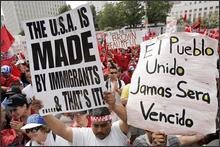
    Hi Everyone,

    The reason I am writing is because I am gearing up to take some students down to Mexico again this year. For those of you who didn't hear about the trip last year - let me explain.

    At the end of June, a team of my students and some additional faculty will be heading down to Mexico to build a house for one of the million families that are less fortunate than any of us. Last year's family consisted of a single mother and two daughters who shared one bed together and lived in a room with a dirt floor, walls made of old garage doors, and a tarp for a roof.

    Our team builds a house for the family in four days. We build using only our hands (no power tools) and we create a basic two room house with a real floor, a real roof, two windows and a door.

    This is a tough job and we know we can do it, but we still need some help. First off, we are looking for prayers not only for the group but also for the family we are helping. Secondly, I am looking for donations to help sponsor myself as well as the other dedicated teens and leaders going down there. Total, it costs each participant about $500. This goes towards transportation, food, supplies, and insurance. Every little bit helps and if you are interested in helping this way then please send a check to me payable to LJC Ministry. My work address will be at the bottom of this email.

    This trip is one of the things that I have spent a lot of time with in this Campus Ministry position. It means a lot to me and it also is such an amazing experience for all the teens. Seeing them grow so much in that one week is a great reminder of why I took this job.

    If you have any questions or want more information about what we are doing then please contact me!!

    Amanda Goei
    Director of Campus Ministry
    Saint Lawrence Academy
    2000 Lawrence Court
    Santa Clara, CA 95051

    Good Friday 2006 Intercession

    To: All Priests and Parish Liturgists

    Bishop Patrick J. McGrath asks that the following petition be included in the General Intercessions at Good Friday’s Liturgy of the Lord’s Passion. Its format should easily accommodate its addition to the prayers already found in the Roman Missal/Sacramentary.

    For those communities celebrating this liturgy in languages other than English, please feel free to translate this intercession for inclusion in those liturgies. (Spanish translation is provided below.)

    XI. For Special Needs

    Let us pray, dear friends, for the special needs of our day,
    that God who created us in love
    will watch over and protect all people of good will.

    Almighty and eternal God,
    you watch over us all the days of our lives.
    Bless our diocese in this year of Jubilee.
    In your love bring peace to our world.
    safe return home of all in the military,
    consolation to victims of disasters,
    and respect and dignity to immigrants.
    We ask this through Christ our Lord.


    XI. Por Las Necesidades Especiales

    Queridos hermanos y hermanas,
    oremos por las necesidades especiales en este día.
    Que Dios que nos ha creado con amor,
    proteja y guíe a todas las personas de buena voluntad.

    Dios eterno,
    Tú que nos proteges, todos los días de nuestra vida.
    Bendice a nuestra Diócesis en este año Jubilar.
    Que el amor que Tú, nos das traiga paz a nuestro mundo.
    Un seguro y feliz retorno, de las personas en las fuerzas armadas,
    consuela a las víctimas de los desastres.
    Y respeto y dignidad por los inmigrantes.
    Todo esto te lo pedimos, por Cristo Nuestro Señor,
    que vive y reina contigo eternamente.

    Wednesday, April 05, 2006

    Parish Communications Workshop Series - May 2 & 9, 2006

    Diocese of San José
    Parish Communications Workshop Series
    May 2 and 9, 2006
    6:30-9:30pm at St. Joseph Cupertino

    What is it?
    It will be two, three-hour workshop sessions to be attended by those in parishes who are responsible for communicating with parishioners. Parish staff and lay people responsible for planning or maintaining parish and school websites, parish bulletins, newsletters, kiosks, and stewardship communications will benefit from attending these hands-on workshops.

    Conducted by professional communicators, we will learn practical tips and techniques for executing a basic set of parish communications vehicles as well as review best practice examples from around the country. Additionally, parish communicators will have a chance to see samples from around the Diocese and get tips for their own materials should they so desire. Please note that our focus will be on communications with parishioners rather than communications between parish or school staffs or ministry groups.

    Who should attend?
    Parish and school staff and laypeople responsible for planning or executing any of the communications vehicles we will discuss are welcome to attend, as are those responsible for the entire communications function. Pastors and pastoral council members are welcome as well.

    What will be covered?

    Session I
    • Level-setting: Why invest in communications? How can you reduce the cost of your communications and still be more effective? How can you better integrate and share content between vehicles? Tips for project management and consensus-building; how to measure your progress. See the opportunity in all the major “moments of truth” and “touchpoints” in parishioner communications.
    • Review of best practice examples from around the country.
    • Execution tips and techniques and best practice examples from around the country for:
      • parish and school kiosks and reception areas
      • weekly bulletins
      • New (and existing) parishioner packets.
    • Review of same materials from around the Diocese; individual critiques as requested and time allows.
    Session II

    • Execution tips and techniques and best practice examples from around the country for:
      • parish websites
      • print and email communications
      • seasonal communications
      • stewardship communications
    • Review of same materials from around the Diocese; individual critiques as requested and time allows.

    Please register with Terrie Iacino at 408-983-0122 to save your spot. Let her know know who you are, which parish you are representing, and why you want to take this workshop series.

    Music and Liturgy Grants from OCP

    Did you know that Oregon Catholic Press (OCP), the publisher of the Breaking Bread, JourneySongs, Flor Y Canto, Glory and Praise, and Spirit & Song hymnals, has given away $500,000 in the last five years to 230 parishes across the United States to help them develop their parish music and liturgy?

    Find out if your parish is eligible, and apply online. Applications for the 2007 awards will be accepted between April 30, 2006 and June 30, 2006.

    Immigration March - April 10, 2006

    San José's religious, civic, and labor communities invite you to join with other faith and immigrant rights groups in a peaceful march in support of comprehensive immigration reform at 4:00p on Monday, April 10, 2006. We will begin to gather at 3:00 pm. This is the first day of Holy Week and we will have living stations where immigrants from diverse cultures and faiths will tell their stories of suffering and hope. We will encourage people to bring American flags to highlight the fact that we are all the face of America and to wear white shirts as a sign of peace. This peaceful march will begin after school gets out on the corner of Story and King and will continue to City Hall (about 3 miles away). For more information: 408-280-7770.

    Monday, April 03, 2006

    Catechumenate Support Group - April 6, 2006

    Just how exactly do you do mystagogy?
    What do you do with the Elect on Holy Saturday morning?
    How do you make a baptismal garment?
    Were we supposed to scrutinize and exorcize the children?
    How can I make sure they keep coming back to church after they're baptized?

    These are just some of the questions we'll tackle at our next Catechumenate Support Group meeting.

    Catechumenate Support Group
    Thursday, April 6, 2006
    12:30p - 2:30p
    Holy Family Parish

    Bring your lunch and your own questions to ask!

    Come learn:

    • 5 steps for effective mystatogy.
    • 3 essential rituals for Holy Saturday morning.
    • 1 simple pattern for making your own baptismal garment.
    • 4 critical points about children and exorcisms.
    • 2 key practices for nurturing your neophytes.

    Other Catechumenate Support Group dates for the year:

    Thursday, June 15, 2006, 12:30p - 2:30p, St. Joseph of Cupertino Parish

    For more information, contact Diana Macalintal at 408-983-0136.


    FILED UNDER: WORKSHOPS AND EVENTS