Here's a review of past articles on Advent.
An Advent Penitential Prayer Service
Reconciliation Services Resources
Advent Basic: Getting Back to Liturgical Essentials
Advent: Season of Anticipation
What is Advent?
First Week of Advent 2004 reflection
A Marian/Advent Examination of Conscience
First Week of Advent 2005 reflection
Adapting Simbang Gabi for your Community
What Heaven Is and Is Not
Showing posts with label Advent. Show all posts
Showing posts with label Advent. Show all posts
Tuesday, December 04, 2007


Friday, November 30, 2007
Advent Morning of Prayer - December 6, 2007
Advent Morning Of Prayer
(sponsored by the Southwest Catechetical Cluster
and the Office of Pastoral Ministries)
and the Office of Pastoral Ministries)
Thursday, December 6th
(9:00 a.m. to 1:00 p.m.)
(9:00 a.m. to 1:00 p.m.)
Villa Holy Names, Los Gatos, California
We Invite
Directors/Coordinators of
Catechetical Ministry, Liturgy, Youth Ministry,
Young Adults, Catechumenate, Adult Faith Formation
and
RCIA Team Members, Faith Formation Teams
Master Catechists, Pastoral Ministers
Lynda DeManti
Pastoral Associate, Santa Teresa Parish
will lead us in prayer and reflection
We Invite
Directors/Coordinators of
Catechetical Ministry, Liturgy, Youth Ministry,
Young Adults, Catechumenate, Adult Faith Formation
and
RCIA Team Members, Faith Formation Teams
Master Catechists, Pastoral Ministers
Lynda DeManti
Pastoral Associate, Santa Teresa Parish
will lead us in prayer and reflection
This gathering will be an opportunity for us to reflect,
on how Mary was the first disciple,
and how she is a model for living our baptismal call
as ministers in the Church.
The theme of Mary will weave our time together
through scripture, faith sharing,
personal reflection, prayer and ritual.
on how Mary was the first disciple,
and how she is a model for living our baptismal call
as ministers in the Church.
The theme of Mary will weave our time together
through scripture, faith sharing,
personal reflection, prayer and ritual.
Registration fee: $20.00
Morning Hospitality and lunch will be provided
Please click here to print a registration form
Wednesday, November 14, 2007
Advent: It's Coming
Here's your reminder that Advent is coming. Everybody dance!
Hat tip to CatholicColbert.com. She wisely listed this as her only liturgy post. Nothing better can be said on the subject. :) Enjoy!
Hat tip to CatholicColbert.com. She wisely listed this as her only liturgy post. Nothing better can be said on the subject. :) Enjoy!
Monday, November 29, 2004
First Week of Advent
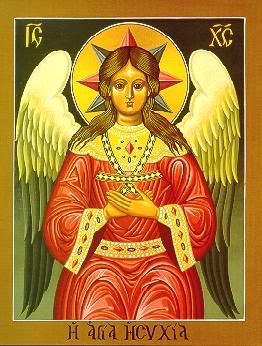 Waiting isn’t always easy. And I’m not talking about the “waiting for the copy machine to warm up” kind of waiting.
In college, my friend was tested for HIV, and we waited together a week for her results. During that week, we prayed and we talked about “what if.” She told me about her dreams, her fears, the people she cared about, the things she’s always wanted to do, and she confessed to me her regrets. That week, she began to see life differently, more clearly. All the things she had thought were important weren’t so important anymore. Slowly, the falseness was being stripped away, and what was left behind at the end of that week was a truer person—one who wanted to plunge into every moment of life, no matter what, instead of sleepwalk through it.
At its best, Advent waiting transforms us in the same way. We aren’t confronted with the possibility of a life-altering disease, but we are shown a glimpse of “what if.” What if swords really became plow-shares, dead stumps grew into fertile trees, wolves and lambs, lions and children play together, and deserts bloom? What if the blind see, the deaf hear, the mute sing, and the virgin conceive? What if, just what if God became like you and me? When the world gets turned upside down like this, where death is life and where the divine is as close as breath, you can’t take anything for granted anymore.
When we approach our Advent waiting as a radical time of transformation—like the cold turkey days of an alcoholic who’s sworn off drink, and this time means it—instead of just a reason to change colors in the church, then Advent becomes more than just a liturgical hiatus until Christmas. If we let it, our Advent sobriety has the power to strip us of everything that we really don’t need. It calls us to slough off all the excess of our lives that keeps us from seeing who we really are underneath—an image of God in human skin. Advent commands us to take only what is necessary on the ark and jolts us awake from our sleepwalk so that we don’t ever again miss recognizing God-With-Us every day of our lives.
But unlike that week of waiting with my friend, Advent transformation isn’t born out of fear. It comes from joy because the promise has already been given. For those with the eyes of faith, “what if” has already happened. God is already with us. The reign is at hand. Heaven is already here. And nothing will break God’s promise.
Our Advent mission then is to make the world look more like the heaven that we already see by faith. We do this by focusing on the essentials—the basic things every human needs in order to reflect the divine. The poor have to be cared for, the hungry have to be fed, the homeless have to be sheltered, and the sick need to be healed. Forgiveness has to be offered, those at war must stop, and peace must be our legacy.
And so during Advent, we abstain from the flurry of Christmas not as a penitential punishment, but as a way to train our eyes to see God even without the angels and trees, crèches and stars. We focus instead on the basics of light in the darkness, silence in the chaos, and stillness in the turmoil. It’s almost as if Advent calls us to faith in the Real Absence of Christ—to believe in Emmanuel even in our darkness, in God-With-Us even when we hear no answer, and in the Incarnation even when we feel nothing at all.
My friend turned out to be negative on her test for HIV. She felt like she got her life back. But she had already begun to recover her life—her true life—when she first confronted “what if.” Christ has already shown us “what if” when he rose from the dead, and ever since his ascension, we have been living in a continuous season of Advent, waiting for Christ to come again to complete God’s “what if.” Until then, let us live each day awake and faithful to God’s promise, so that we can make this world of war and hatred, poverty and horror, unemployment, divorce, abuse, and apathy a truer reflection of God with us and heaven already here.
In this week’s DSJ Liturgy Notes, you’ll find:
- World AIDS Day – December 1, 2004
- Evening Prayer for Peace – December 7, 2004
- Immaculate Conception – December 8, 2004
- Diocesan Vespers in Honor of Our Lady of Guadalupe – December 10, 2004
- What is Advent?
- Advent: Season of Anticipation
- Advent Basics: Getting Back to Liturgical Essentials
- For Your Reading: To Crown the Year
- The Liturgy Office Will Never Be the Same
- Classifieds: Seek and Ye Shall Find
- Sample Intercessions for December 5, 2004
I know you’ve waited a long while for this edition of Work of the People. Thanks for checking in during your wait and for letting me know that you miss it. During this Advent, let us all wake up to all our “what ifs” and encourage each other as we wait in joyful hope for the coming of our savior Jesus Christ.
Diana Macalintal
Associate for Liturgy
Immaculate Conception – December 8, 2004, Holy Day of Obligation
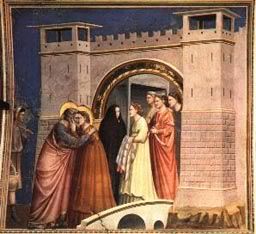 2004 marks the 150th Anniversary of the Proclamation of the Dogma of the Immaculate Conception of Our Lady. This teaching professes that from the moment of Mary’s conception, she was free from original sin, preparing her to become the Mother of God, the “God-Bearer” or Theotokos. (Don't forget that the Immaculate Conception is about Mary being conceived from the union of her parents, Anna and Joachim.)
What this dogma teaches us is that all of God’s children are destined to be free from sin and bearers of the divine, for everything that happens to Mary is our destiny as well. Mary is the first of all disciples and the first to taste the fullness of what Jesus’ incarnation, resurrection, and ascension promise us. In a way, Mary shows us what our Advent waiting will transform us into—persons fully alive and open to God.
The United States Conference of Catholic Bishops offer four announcements to be used in parish bulletins in this anniversary year of the Immaculate Conception. You can find them here.
What is Advent?
According to the Church’s General Norms for the Liturgical Year and the Calendar:
#39. Advent has a twofold character: as a season to prepare for Christmas when Christ’s firth coming to us is remembered; as a season when that remembrance directs the mind and heart ot await Christ’s Second Coming at the end of time. Advent is thus a period of devout and joyful expectation.
#40. Advent begins with evening prayer I of the Sunday falling on or closest to 30 November and ends before evening prayer I of Christmas.
#41. The Sundays of this season are named the First, Second, Third, and Fourth Sundays of Advent.
#42. The weekdays from 17 December to 24 December inclusive serve to prepare more directly for the Lord’s birth.
#39. Advent has a twofold character: as a season to prepare for Christmas when Christ’s firth coming to us is remembered; as a season when that remembrance directs the mind and heart ot await Christ’s Second Coming at the end of time. Advent is thus a period of devout and joyful expectation.
#40. Advent begins with evening prayer I of the Sunday falling on or closest to 30 November and ends before evening prayer I of Christmas.
#41. The Sundays of this season are named the First, Second, Third, and Fourth Sundays of Advent.
#42. The weekdays from 17 December to 24 December inclusive serve to prepare more directly for the Lord’s birth.
Advent: Season of Anticipation
By Brother John Samaha, S.M.
 The Season of Advent has a twofold character, a double meaning. Advent prepares us for Christmas, the celebration of Christ’s first coming to us, and it also reminds us to direct our minds and hearts to be prepared for Christ’s second coming at the end of time. In Christian usage the word “advent” (adventus) has a special liturgical significance, but the origin of the word is pagan.
At the time of Jesus’ birth, the pagans observed a manifestation of their divinity that came to dwell in its temple at a certain time each year. This feast was called advent, and it marked an anniversary of the return of their god to the temple. During this special time, the temple was open. Ordinarily the temple was closed.
In the days of the Roman Empire, advent also celebrated the coming of the emperor.
The word “advent” was suitable to describe the coming of the Son of God in the temple of his human flesh. Gradually the use of this word was limited to describe the coming of the Lord. This advent, the coming of the Lord and the anniversary of his birth, replaced the advent and birth of the unvanquished sun of the winter solstice. This use of the word “advent” gained prominence during the reign of the Emperor Constantine (306-337). To grant tolerance to all religions and to allow the open practice of Christianity, he issued the Edict of Milan in 313. Soon Christianity and its celebrations overshadowed pagan symbolism of advent.
The ancient idea of advent underlies the prayers of the season of Advent that call forth the coming of the Lord, often with the same image of the temple.
Generally Advent signals a time to prepare for Christmas, the celebration of the first coming of the Lord. But the prayer texts and Scripture readings of the Sunday Masses and the Liturgy of the Hours give ample attention to the second coming of the Lord to which we look forward.
In reality the three distinct accents of the liturgy of the Advent season are defined by the three comings of the Lord: yesterday, at Bethlehem, when the Son of God was born of the Virgin Mary; today, in our world, where he is incarnate in the Church, in the Sacraments, and in the faithful baptized into grace; tomorrow, when he returns in glory.
This, then, is the rich meaning of Advent. From the beginning of the liturgical year we celebrate the whole panorama of the mystery of salvation history.
The variety of this season is not only desirable, it is truly appropriate because Advent is oriented toward the one who has come once and for all, who is coming, and who will come.
For reprint permission of this article, please contact the editor at Macalintal@dsj.org.
The Season of Advent has a twofold character, a double meaning. Advent prepares us for Christmas, the celebration of Christ’s first coming to us, and it also reminds us to direct our minds and hearts to be prepared for Christ’s second coming at the end of time. In Christian usage the word “advent” (adventus) has a special liturgical significance, but the origin of the word is pagan.
At the time of Jesus’ birth, the pagans observed a manifestation of their divinity that came to dwell in its temple at a certain time each year. This feast was called advent, and it marked an anniversary of the return of their god to the temple. During this special time, the temple was open. Ordinarily the temple was closed.
In the days of the Roman Empire, advent also celebrated the coming of the emperor.
The word “advent” was suitable to describe the coming of the Son of God in the temple of his human flesh. Gradually the use of this word was limited to describe the coming of the Lord. This advent, the coming of the Lord and the anniversary of his birth, replaced the advent and birth of the unvanquished sun of the winter solstice. This use of the word “advent” gained prominence during the reign of the Emperor Constantine (306-337). To grant tolerance to all religions and to allow the open practice of Christianity, he issued the Edict of Milan in 313. Soon Christianity and its celebrations overshadowed pagan symbolism of advent.
The ancient idea of advent underlies the prayers of the season of Advent that call forth the coming of the Lord, often with the same image of the temple.
Generally Advent signals a time to prepare for Christmas, the celebration of the first coming of the Lord. But the prayer texts and Scripture readings of the Sunday Masses and the Liturgy of the Hours give ample attention to the second coming of the Lord to which we look forward.
In reality the three distinct accents of the liturgy of the Advent season are defined by the three comings of the Lord: yesterday, at Bethlehem, when the Son of God was born of the Virgin Mary; today, in our world, where he is incarnate in the Church, in the Sacraments, and in the faithful baptized into grace; tomorrow, when he returns in glory.
This, then, is the rich meaning of Advent. From the beginning of the liturgical year we celebrate the whole panorama of the mystery of salvation history.
The variety of this season is not only desirable, it is truly appropriate because Advent is oriented toward the one who has come once and for all, who is coming, and who will come.
For reprint permission of this article, please contact the editor at Macalintal@dsj.org.
Advent Basics: Getting Back to Liturgical Essentials
 De-Clutter your church to let its primary purpose shine through
Clean up the vestibule area of your church.
Remove old flyers, bulletins, and pamphlets. Organize the area so that the first thing people feel when they walk in is welcome. The primary purpose of this area is for gathering and welcoming people. Make sure there is enough room for this purpose. Move extraneous things like tables of books and leaflets away from gathering and walking spaces to another area where people can browse and learn more about the community through pictures and announcements. Organize these materials neatly.
Clean up the choir area.
Avoid storing books and equipment here because the primary purpose of this area is first of all worship. Even if the choir is in the loft where no one can see them, the place where the choir exercises its ministry should look like a place that enables reverent worship. It’s hard for choir members to genuinely pray at Mass if the place where they pray looks more like a storage area.
Clean up the sanctuary area.
 The primary purpose of the sanctuary area is for the presidency of the assembly’s worship, the proclamation of God’s Word, and the celebration of the Eucharist. Therefore, the primary objects that should be prominent in this area are the altar, the ambo, and the presider’s chair. Everything else is secondary. Remove extraneous tables and chairs. Put only the altar cloth, corporal, bread and wine, and Sacramentary on the altar. Do not put water glasses for the presider, papers with Mass announcements or intentions, candles or flowers, or envelopes with Mass stipends or prayers on the altar. If the presider needs water, use a side table. Mass announcements or intentions should be in the bulletin or in the presider’s or commentator’s binder. Candles and flowers should be freestanding, placed away from the altar so that the celebrant, deacon, and other ministers can easily prepare the cups and plates for Communion without twisting around candle and flower stands. Also, be careful that the placement of decorations does not act as an altar rail, dividing the “holy space” from the “not holy space.” Envelopes with Mass intentions are seen most visibly during November when the dead are remembered. It is good to remember the dead, but do not place these envelopes, no matter how nicely decorated with ribbon, on top of the altar. This looks too much like our medieval practice of purchasing indulgences. If you want to display these envelopes, put them with the Book of the Dead, or at the baptismal font, on in the shrine of your parish patron saint.
Subscribe to:
Posts (Atom)